Artificial intelligence is everywhere today — woven into nearly every aspect of life and conversation. But what is it exactly, what can it do, and more importantly, how can it serve you and your patients?
To understand its role, we should start with definitions. “Artificial” refers to something made by humans rather than occurring naturally, often designed to simulate the real thing. “Intelligence” describes the capacity to learn, reason, adapt, and solve problems — abilities central to understanding and navigating the world. The term “artificial” sometimes carries negative undertones, suggesting something insincere or unnatural, while the word “Augmented” implies enhancement — making something more complete, effective, or capable.
“Artificial intelligence” (AI) is a branch of computer science devoted to developing systems that perform cognitive tasks typically requiring human intellect, such as learning, reasoning, and decision-making. These systems process data, identify patterns, and make predictions that often emulate human thought.
“Augmented intelligence” (AI), by contrast, is human-centric, focusing on collaboration between humans and machines. Instead of replacing human expertise, it enhances it — using advanced analytics and vast computational power to support better judgments and outcomes. In dentistry, this distinction is essential. Our profession thrives on human empathy, intuition, and ethical care. Therefore, dentistry should embrace an augmented, rather than purely artificial, approach — one that integrates machine learning and diagnostic data with the clinician’s judgment and compassion.
Yet this integration raises vital ethical questions. Borrowing inspiration from Isaac Asimov’s “Three Laws of Robotics,” we might propose similar principles for dental AI:
It must never harm a patient;
it must follow human direction within that constraint; and
it must protect its data integrity without violating the first two rules.
Augmented intelligence is a powerful addition to modern dentistry — one that, used ethically and wisely, will amplify human intelligence, empowering both practitioner and patient.
Sincerely,
George Freedman BSc, DDS, FIADFE, DiplABD, FAACD, FASDA, FPFA on behalf of the Artificial Intelligence Journal of Medicine and Dentistry (AIMEDENT Journal) georgefreedmandds@gmail.com
Documentation, attribution, and skepticism as clinical safety tools
Defensive medicine used to mean ordering one more test, writing one more line in the note, or documenting that risks were discussed “in detail.” That definition no longer holds. In the AI era, defensive medicine is less about doing more, and more about how decisions were made, who contributed to them, and how uncertainty was handled once artificial intelligence entered the workflow.
The medical record is no longer written by a single clinician at the end of a long shift. It is increasingly co-authored by ambient scribes, summarization engines, clinical decision support tools, and large language models that can sound confident even when they are wrong.
Here is the legal reality clinicians need to absorb early: When AI enters the chart, responsibility does not shift. It concentrates.
A shared workspace, personal liability
Most clinicians already use AI, whether they call it that or not. Ambient documentation, auto-generated assessments, triage tools, record summarization, and literature synthesis are now routine. These tools reduce friction and save time. But they also introduce a new medico-legal problem:
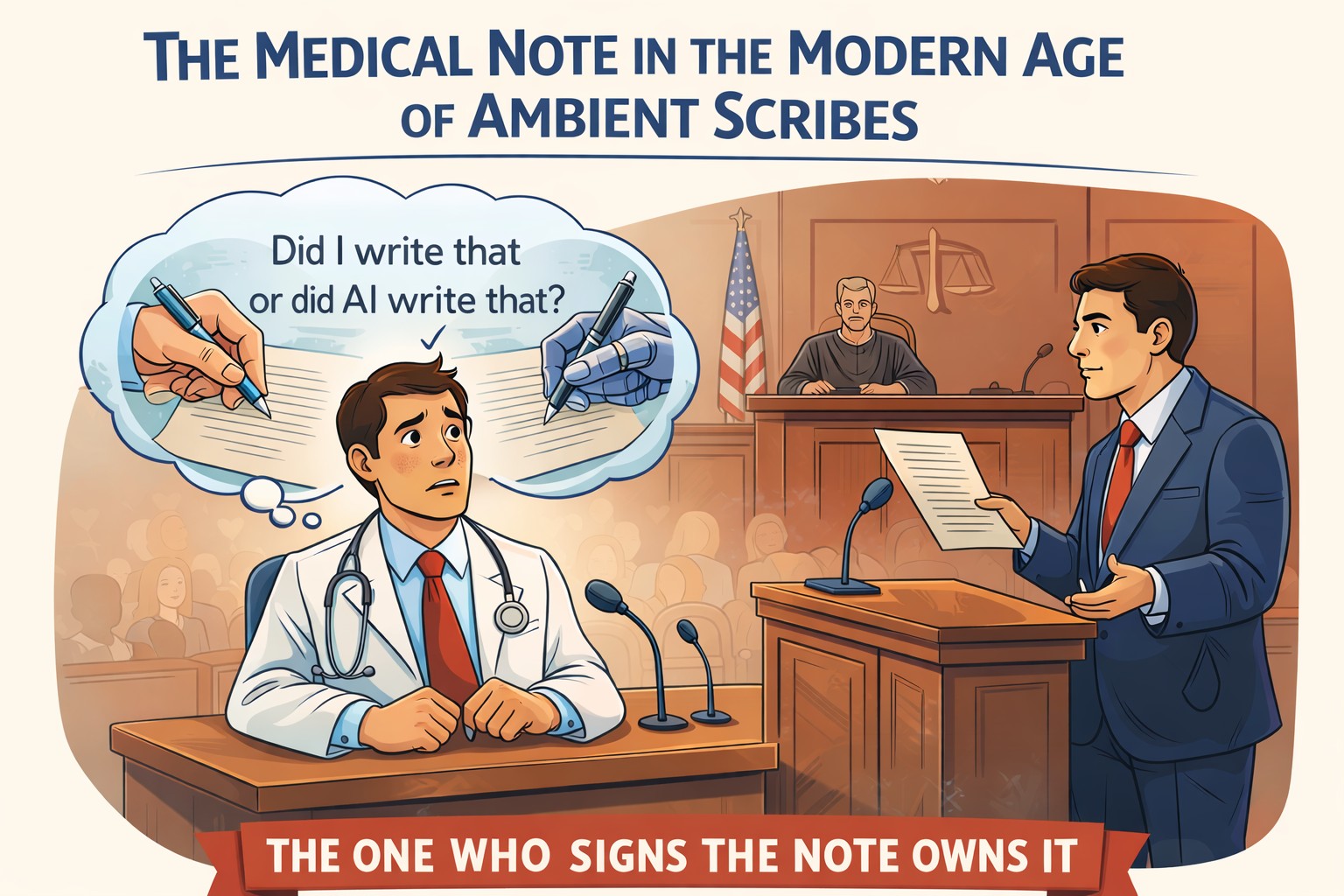
If an AI-generated statement is wrong and it appears in the chart, who owns it?
The law has been consistent so far. The signer owns the note. Courts do not meaningfully distinguish between human-authored and AI-assisted documentation. The medical record remains a clinician’s representation of reality, regardless of how the text was produced. That alone should change how we document.
Photo supplied
Hallucinations are a feature not a bug
They are the algorithm.
One of the most dangerous myths in healthcare AI is the belief that hallucinations are technical glitches that will be fixed with better models. They will not. Hallucinations are a structural feature of large language models. These systems do not retrieve truth. They generate statistically plausible language based on patterns in prior data. When ground truth is missing, incomplete, or outdated, the model interpolates. It fills in gaps. Fluently. Confidently.
This behaviour is not accidental. Models are rewarded for producing answers, not for saying “I don’t know.” In fact, any AI model that claims over 75 percent accuracy in a complex system shouldn’t be trusted. It’s probably learning the wrong thing very well.
Healthcare is a non-stationary system. Human behaviour changes. Policies shift. Clinical practice evolves. Data distributions drift. In such environments, extremely high accuracy often signals overfitting, false precision, or dataset leakage rather than real understanding.
Models can appear impressive by exploiting shortcuts:
Predicting the dominant outcome in imbalanced datasets
Learning documentation artifacts instead of physiology
Using correlation without causation
Performing well on historical data while failing quietly in real life
These are not bugs. They are the “cost of prediction” in living systems.
Language models amplify this risk. They sound authoritative. They write cleanly. They can fabricate references, guidelines, or reasoning unless the reader already knows the answer.
In healthcare, fluency without grounding is not neutral. It is dangerous.
Accuracy is not trustworthiness
We are repeatedly told to trust AI because it is “95 percent accurate.”
Accuracy is not safety.
Accuracy can hide bias.
Accuracy can ignore uncertainty.
Accuracy can collapse under distribution shifts.
In medicine, what matters is not how often a model is right in aggregate, but how it fails, when it fails, and whether humans can detect that failure in time.
Clean metrics do not equal resilient performance.
Photo supplied
“Who (or what) said what” now matters
This is where defensive medicine must evolve.
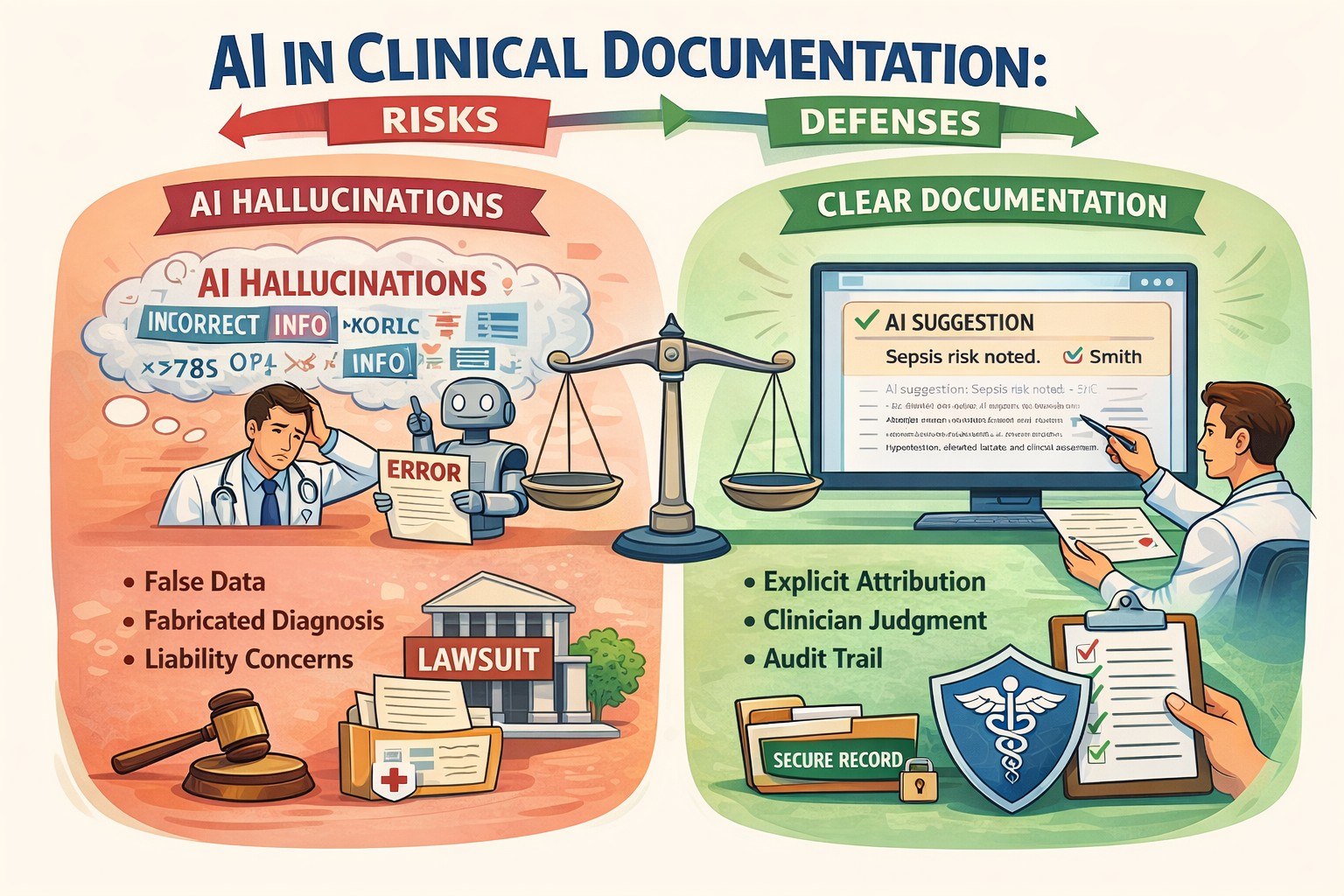
When AI contributes to clinical reasoning or documentation, attribution becomes a safety tool.
Compare:
“Plan: initiate antibiotics due to concern for sepsis.”
with:
“AI-assisted decision support suggested possible sepsis; recommendation reviewed and accepted based on hypotension, lactate elevation, and clinical assessment.”
Clinically similar.
Legally and defensively, very different.
Attribution documents judgment. It shows that AI assisted but did not replace reasoning. Years later, that distinction can be very important.
The standard of care is already shifting
Rapidly and unevenly, AI is becoming embedded in expectations of care.
Radiology offers an early signal. In some settings, AI-assisted triage of brain imaging is routine. A future plaintiff may reasonably ask why available AI support was not used.
At the same time, clinicians may also be exposed when they use AI and override it, especially after adverse outcomes. This tension has been described as the negative outcome penalty paradox: clinicians can be punished whether they follow or reject AI recommendations once AI becomes normalized.
Defensive medicine now requires reasoned positioning, not blind adoption or avoidance.
Defensive documentation needs a major redesign
Traditional defensive documentation emphasized thoroughness.
Document when AI recommendations were rejected and why
Be cautious with AI-generated citations and guidelines
Preserve clinician reasoning, not just summaries
Several professional bodies and risk management groups now recommend transparency and disclosure around AI use in clinical documentation. This is not about longer notes. It is about defensible notes.
Training clinicians is now a legal issue, not just an educational one
One striking theme across medico-legal AI discussions is this: lack of AI literacy is becoming a liability risk. Using tools that you do not understand or failing to understand their limitations weakens your ability to defend your decisions.
Clinicians do not need to become data scientists. But they do need to understand:
What AI systems can and cannot do
Where hallucinations are most likely
How training data limitations affect output
Why confidence does not equal correctness
Ignorance will not be a defense when AI tools are widely available and increasingly normalized.
Augmented intelligence is the only defensible frame
Many organizations now favour the term augmented intelligence over artificial intelligence. That framing is crucial. Augmented intelligence keeps the clinician explicitly in the loop. It reinforces that AI assists but does not decide. The moment AI silently replaces reasoning in documentation, both patient safety and legal defensibility erode.
The chart is a legal narrative again
For years, clinicians were trained to treat notes as billing tools or handoff summaries. In the AI era, the chart reclaims its original role: a legal narrative of clinical reasoning under uncertainty.
AI can help write that story. It cannot own it.
Defensive medicine did not disappear in the age of AI. It matured.
About the author
Dr. Hassan Bencheqroun is a pulmonary and critical care physician, assistant professor at the University of California Riverside School of Medicine, and CEO of Medical AI Academy. He hosts “The AI-Ready Doctor podcast” and is an active AiMed participant and speaker bridging clinical care, education, and technology. He is actively focused on practical, clinician-safe AI adoption
The healthcare industry has entered a transformative era. Agentic artificial intelligence — systems capable of autonomous reasoning, planning, and multi-step task execution with defined human oversight — is transitioning from research concept to enterprise deployment. Unlike traditional machine learning that excels at narrow pattern recognition or generative AI that produces content reactively, agentic AI operates with goal-directed autonomy: decomposing complex objectives, coordinating specialized agents across disparate systems, and adapting strategies based on outcomes. This paradigm shift addresses healthcare’s most persistent challenges, including administrative burden consuming 20 percent of institutional budgets, physician burnout from documentation requirements, and the growing complexity of clinical decision-making.1
The acceleration in late 2025 has been remarkable. On December 1, 2025, the U.S. Food and Drug Administration announced agentic AI deployment for all agency employees — the first major regulatory body to institutionalize autonomous AI workflows for administrative functions including meeting management, document processing, and compliance operations.2 Critically, these internal tools support agency operations but do not autonomously render pre-market review decisions — human reviewers retain accountability for regulatory determinations. Days later, the Department of Health and Human Services released its comprehensive AI strategy positioning autonomous systems as central to federal health operations.3 For clinicians, administrators, patients, and healthcare entrepreneurs, understanding this transformation has become essential.
Defining the Agentic Paradigm
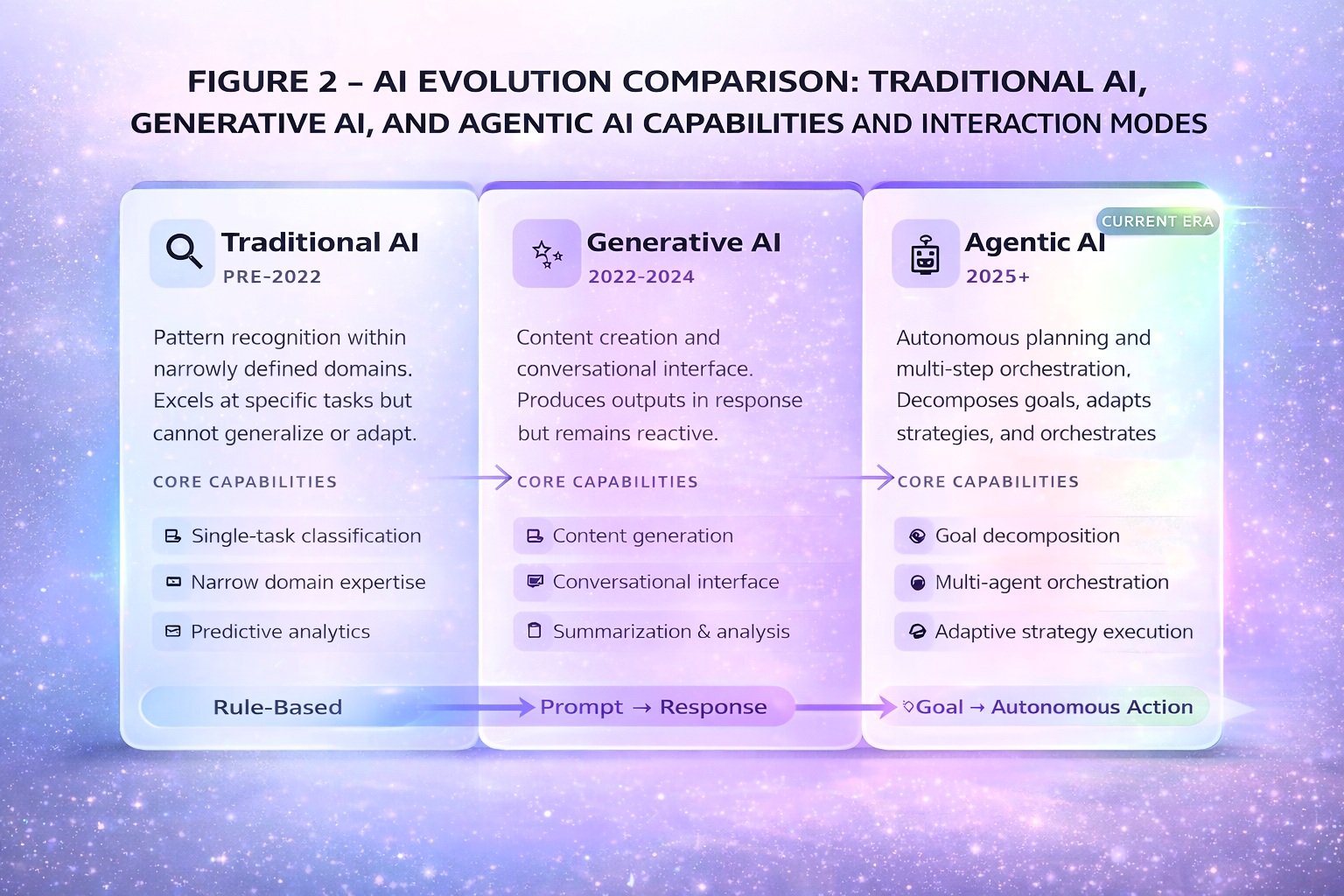
The distinction between agentic AI and its predecessors is substantive. Traditional machine learning excels at classification within narrow domains — identifying pathological findings in radiological images or predicting sepsis risk. Generative AI expanded to content creation and conversational interaction but remains fundamentally reactive. Agentic AI introduces systems that pursue defined goals with limited supervision, typically employing multiple specialized agents coordinated through an orchestration layer.4
Fig. 2
AI evolution comparison — Traditional AI, Generative AI, and Agentic AI capabilities and interaction modes
Technical precision requires distinguishing workflow automation from true goal-directed autonomy. Current enterprise deployments — Epic’s named agents, Microsoft’s orchestration framework — primarily automate predefined multi-step workflows with human checkpoints. Emerging research systems demonstrate more sophisticated autonomous reasoning, but these remain largely experimental. Research published in Frontiers in Artificial Intelligence found that agentic architectures can reduce cognitive workload by up to 52 percent compared to traditional clinical decision support, though this finding emerged from controlled simulation environments rather than clinical deployment.1 Healthcare leaders should maintain appropriate skepticism about vendor claims until validated outcome data emerges.
The enterprise technology landscape
The market is consolidating around major platforms. Microsoft’s healthcare agent orchestrator, unveiled at Build 2025, provides pre-configured agents with multi-agent orchestration for enterprise deployment, with pilot implementations at Stanford Medicine and Oxford University Hospitals.5 Epic Systems, serving approximately 38 percent of U.S. inpatient facilities with 325 million patient records, has deployed multiple AI agents: Emmie for patient engagement through MyChart, Art for provider communications, and Penny for revenue cycle management. However, access to these capabilities depends on Epic version, module licensing, and organizational readiness — many customers remain on versions predating agent functionality, and 6-12 months of configuration effort should be expected before realizing full value.6
Epic’s Cosmos AI foundation model initiative, trained on data from 275 million patients, may ultimately prove more transformative than individual named agents — representing a data advantage that competitors and startups cannot easily replicate. Nuance’s Dragon Copilot extends ambient documentation to nursing workflows, while the Atropos Evidence Agent proactively surfaces real-world evidence during clinical encounters without requiring explicit queries.7 For the 62 percent of hospitals not on Epic, integration complexity increases substantially, and Microsoft’s platform may offer broader interoperability.
Table 1: Healthcare Agentic AI Platform Comparison (January 2026)
Azure AI Foundry; broader EHR interoperability; piloting at academic centers
Epic (Emmie, Art, Penny, Cosmos)
Patient engagement, provider communications, revenue cycle, foundation model
Version-dependent; 6-12-month configuration; strongest for existing Epic customers
Nuance Dragon Copilot
Ambient clinical and nursing documentation, clinical query response
Generally available; multi-EHR integration; requires workflow design
Atropos Evidence Agent
Proactive real-world evidence delivery at point of care
Pilot deployments; addresses evidence accessibility gap
Regulatory landscape and liability considerations
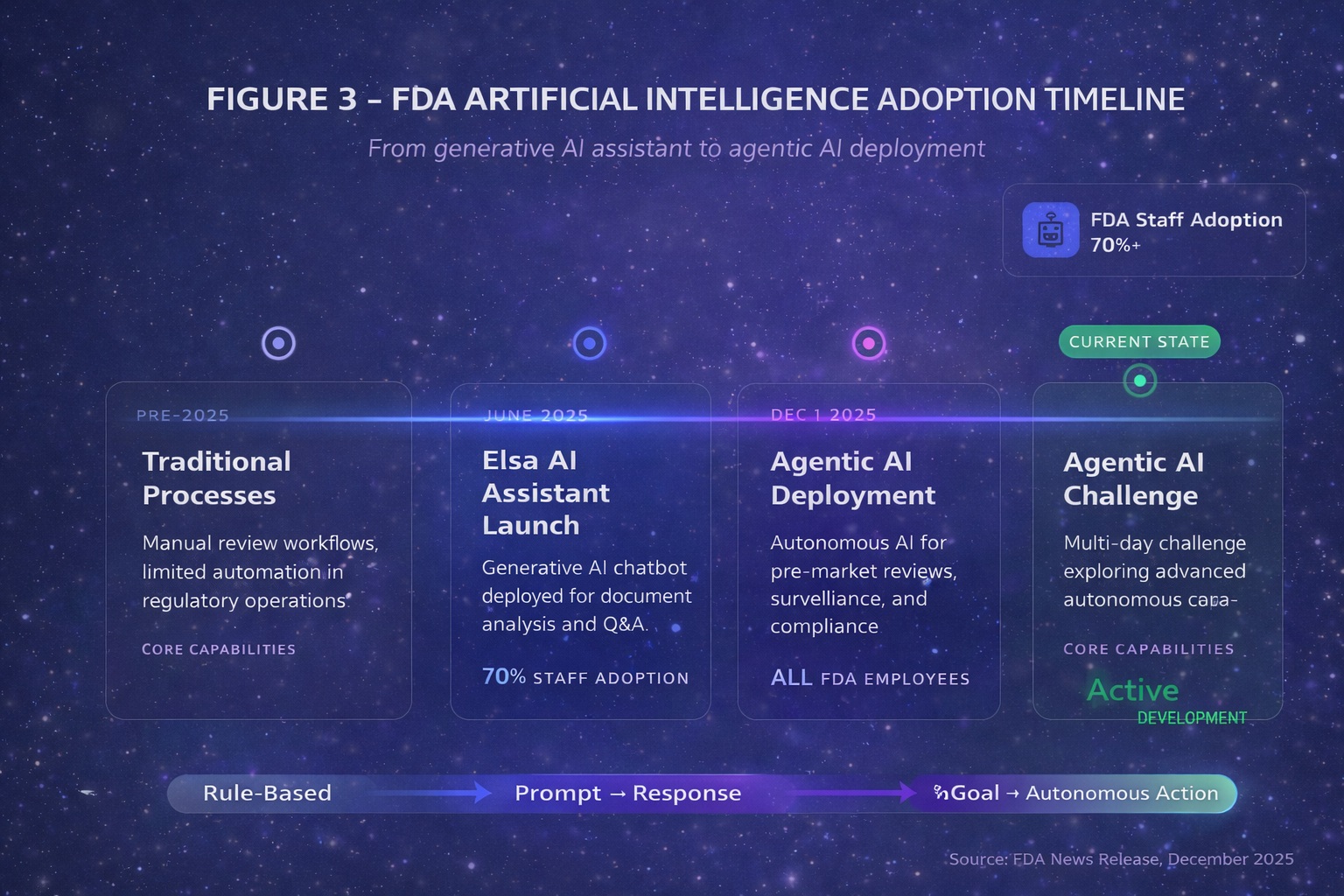
The FDA’s December 2025 agentic AI deployment requires careful interpretation. The agency’s autonomous systems support administrative functions within a secure GovCloud environment that does not train on industry submissions. This builds on the June 2025 launch of Elsa, a generative AI assistant now used by over 70 percent of FDA staff.8 The FDA’s database lists over 1,250 AI-enabled medical devices authorized for marketing, but the vast majority are narrow diagnostic imaging tools — not autonomous clinical agents. True agentic systems for clinical decision-making face the most stringent Class III regulatory pathway.9
Fig. 3
FDA AI adoption timeline – Elsa launch (June 2025) through Agentic AI deployment (December 2025)
International regulatory coordination is advancing. The European Medicines Agency and FDA jointly issued AI guidance for drug development, while EU Medical Device Regulation Article 14 mandates human oversight for high-risk AI systems — requirements that will significantly constrain autonomous deployment in European markets.10 State-level fragmentation compounds complexity: Illinois prohibits AI from making independent therapeutic decisions effective August 2025, Delaware is establishing an agentic AI regulatory sandbox, and Florida requires 24-hour written consent before AI records therapy sessions.11
The liability landscape presents novel challenges. The learned intermediary doctrine traditionally shields device manufacturers when physicians exercise independent judgment — but agentic systems that execute autonomously may eliminate the “learned intermediary”, exposing manufacturers to direct liability. When multi-step autonomous workflows result in patient harm, accountability allocation across vendors, health systems, and supervising clinicians involves unsettled legal questions. Organizations should demand clear contractual liability allocation and appropriate indemnification provisions before deployment.12
Patient safety and the automation challenge
Autonomous systems introduce safety considerations distinct from traditional clinical decision support. The patient safety literature documents automation complacency — the well-established tendency for humans to over-trust automated systems and fail to catch errors, a risk that increases with autonomy.13 Agentic systems may fail silently, with errors propagating through multi-step workflows before becoming clinically apparent. Healthcare organizations must conduct prospective hazard analysis before deployment, identifying anticipated failure modes and establishing detection mechanisms.
Current adverse event reporting infrastructure was designed for human and device errors, not algorithmic failures. Health systems deploying agentic AI should establish dedicated mechanisms for identifying, reporting, and analyzing AI-related safety events — including near-misses that existing frameworks may not capture. Governance architecture must include decision audit trails documenting agent actions, intervention protocols for human override, and continuous monitoring for emergent behaviors not apparent during validation.
The patient perspective deserves explicit attention. Early research on patient acceptance of AI-mediated care suggests significant variation based on task type, transparency, and perceived physician oversight. Patients generally accept AI for administrative functions and diagnostic support but express reservations about autonomous treatment decisions.14 Trust-building requires clear communication about when and how AI participates in care — something current disclosure frameworks inadequately address.
Workforce transformation and economic realities
Administrative tasks consume approximately 20 percent of healthcare institutional budgets, while physicians spend 13 percent of their time on similar responsibilities. Agentic AI targets precisely these activities.1 However, whether autonomous systems will substitute for clinical labour or complement it remains an open question with profound implications for workforce planning, medical education, and specialty choice. Research from Johns Hopkins identified a “competence penalty” whereby physicians using AI are perceived as less capable by peers and patients — creating adoption barriers even when AI demonstrably improves outcomes.15
Nursing workflows require particular attention. Nurses represent the largest clinical workforce and have distinct concerns about ambient AI documentation — including accuracy of captured information, workflow disruption during patient encounters, and implications for professional judgment. Dragon Copilot’s nursing extension requires careful workflow design and should not be deployed without nursing informatics involvement.
Economic analysis demands rigour beyond vendor projections. Implementation costs — including software licensing, integration, training, workflow redesign, governance infrastructure, and ongoing maintenance — are substantial. The productivity paradox, wherein IT investments historically fail to improve measured healthcare productivity, warrants appropriate skepticism.16 Reimbursement implications remain unclear: will payers reimburse for AI-augmented care, or will they demand discounts based on presumed efficiency gains? These dynamics will significantly influence adoption economics.
Strategic framework for healthcare organizations
Healthcare leaders face a fundamental build, buy, or partner decision. Organizations with substantial technical capacity and differentiated use cases may justify custom development. Most will purchase vendor solutions, with the critical choice being platform selection based on existing EHR infrastructure and integration requirements. Partnership models — embedding vendor capabilities within organizational workflows through co-development arrangements — offer middle-ground approaches.
Market trajectory data reinforces strategic urgency. While less than one percent of enterprise software incorporated agentic AI in 2024, Gartner projects 33 percent adoption by 2028, with the global market reaching $200 billion by 2034.17 Platform consolidation around Microsoft and Epic creates challenges for startups, though opportunities remain in vertical specialization, underserved care settings, and geographic niches where incumbents lack focus. Organizations developing institutional competencies now will establish advantages that later entrants cannot easily replicate.
The trajectory points beyond workflow efficiency toward fundamental care model transformation. When autonomous systems can conduct comprehensive health assessments in patients’ homes, when diagnostic capabilities requiring tertiary centres become available at community pharmacies, the very concept of a “medical visit” will evolve. Geographic distribution implications deserve attention: agentic AI may extend specialist reach to underserved areas where entire countries have only a handful of imaging experts, potentially democratizing access to clinical expertise.18
For healthcare leaders, entrepreneurs, and clinicians, the imperative is clear. Agentic AI is not a speculative future but an operational present reshaping regulatory process, clinical workflows, patient expectations, and competitive dynamics. Organizations that develop competencies in autonomous system governance, workforce adaptation, safety monitoring, and strategic deployment will capture the efficiency gains and quality improvements these technologies enable while managing the substantial risks they introduce. The transformation is underway. The strategic question is no longer whether to engage but how to lead — safely, ethically, and with appropriate humility about what remains unknown.
References
Hinostroza Fuentes N, Karim S, Tan L, AlDahoul N. AI with agency: A vision for adaptive, efficient, and ethical healthcare. Frontiers in Artificial Intelligence. 2025;8.
U.S. Food and Drug Administration. FDA Expands Artificial Intelligence Capabilities with Agentic AI Deployment. FDA News Release. December 1, 2025.
U.S. Department of Health and Human Services. HHS Artificial Intelligence Strategy. December 4, 2025.
IBM. What is Agentic AI? IBM Technology Documentation. 2025.
Microsoft. Healthcare Agent Orchestrator. Microsoft Build 2025 Announcement. May 2025.
Healthcare IT News. Epic unveils AI agents, showcases new foundational models at UGM 2025. 2025.
Microsoft Industry Blog. Agentic AI: Shaping the future of healthcare innovation. November 18, 2025.
Parenteral Drug Association. News Brief: FDA Expands AI with Agentic Deployment. December 2025.
Bipartisan Policy Center. FDA Oversight: Understanding the Regulation of Health AI Tools. November 10, 2025.
European Pharmaceutical Review. EMA and FDA issue joint AI guidance for medicine development. January 2026.
Manatt, Phelps & Phillips, LLP. Health AI Policy Tracker. 2025.
Price WN, Gerke S, Cohen IG. Potential liability for physicians using artificial intelligence. JAMA. 2019;322(18):1765-1766.
Parasuraman R, Manzey DH. Complacency and bias in human use of automation. Human Factors. 2010;52(3):381-410.
Longoni C, Bonezzi A, Morewedge CK. Resistance to medical artificial intelligence. Journal of Consumer Research. 2019;46(4):629-650.
Medical Economics. Physicians who use AI face a ‘competence penalty,’ Johns Hopkins study finds. 2025.
Himmelstein DU, Jun M, Busse R, et al. A comparison of hospital administrative costs in eight nations. Health Affairs. 2014;33(9):1586-1594.
Gartner. Top Strategic Technology Trends for 2025: Agentic AI. 2025.
Microsoft Research. The AI Revolution in Medicine, Revisited. Microsoft Research Podcast. July 23, 2025.
About the author
Dr. Srikanth Mahankali is a recognized authority in medical AI implementation and policy. As Chief Executive Officer of Shree Advisory & Consulting and a member of the NSF/MITRE AI Workforce Machine Learning Working Group, he has contributed to the development of national AI strategy while advancing responsible innovation in healthcare technology.
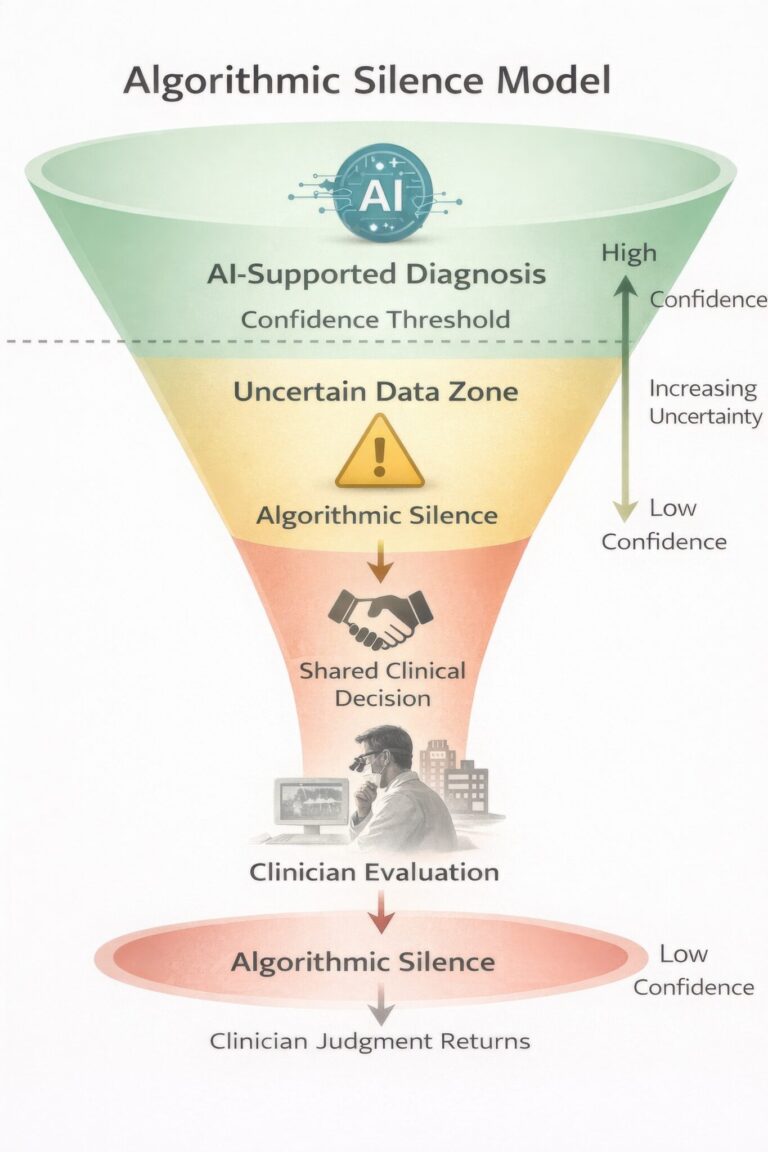
Artificial intelligence has entered dentistry with remarkable speed. Machine learning systems now assist clinicians in detecting caries, interpreting radiographs, identifying periodontal changes, and screening oral lesions with levels of consistency approaching expert performance. Ethical discussion surrounding dental AI has largely focused on improving prediction accuracy. Clinical medicine recognizes uncertainty as an essential component of responsible diagnosis. This paper argues that responsible AI-assisted dentistry requires recognition of a critical ethical boundary — the moment at which automated diagnostic expression should be intentionally withheld.
Defining algorithmic silence
Algorithmic silence may be defined as the intentional withholding of automated diagnostic recommendation when model confidence, contextual validity, or ethical safety thresholds are not sufficiently satisfied. Silence functions as a designed safeguard embedded within clinical decision-support architecture, allowing uncertainty to become an actionable clinical signal.
Algorithmic silence in oral disease diagnosis
Oral disease diagnosis represents one of the most uncertainty-rich domains of healthcare. AI systems trained on image datasets may perform effectively in advanced disease detection while remaining vulnerable in early or atypical presentations. Calibrated abstention signals prompting referral or further investigation may better protect patients than forced classification.
Responsibility and clinical authority
Continuous algorithmic prediction introduces the risk of responsibility diffusion. Healthcare ethics maintains that the individual who decides bears responsibility. Algorithmic silence helps re-establish accountability by explicitly returning decision authority to the practitioner whenever uncertainty exceeds safe limits.
Algorithmic silence represents an essential evolution in AI-assisted oral healthcare. By embedding uncertainty awareness within clinical systems, dentistry can preserve professional judgment while benefiting from computational intelligence.
References
Amodei D, Olah C, Steinhardt J, et al. Concrete problems in AI safety. arXiv. 2016.
Kelly CJ, Karthikesalingam A, Suleyman M, Corrado G, King D. Key challenges for delivering clinical impact with artificial intelligence. BMC Medicine. 2019;17:195.
Schwendicke F, Samek W, Krois J. Artificial intelligence in dentistry: chances and challenges. Journal of Dental Research. 2020;99(7):769–774.
Floridi L, Cowls J, Beltrametti M, et al. AI4People—An ethical framework for a good AI society. Minds and Machines. 2018;28:689–707.
World Health Organization. Ethics and governance of artificial intelligence for health. Geneva: WHO; 2021.
European Commission. Artificial Intelligence Act. Brussels; 2024.
About the author
Dr. Ameed Khalid Abdul-Hamid is an Iraqi–British dental surgeon and academic researcher, internationally recognized for his contributions to artificial intelligence in dentistry and healthcare. He holds advanced qualifications from the University of Baghdad and the University of London, and is a Fellow of the Royal College of Surgeons (UK). Dr. Abdul-Hamid serves as Chairman of the Arab Organisation for Artificial Intelligence in Healthcare and Chairman of the Saudi-British Medical Forum (London). His research focuses on AI-enabled diagnostics, digital health systems, and the ethical, responsible integration of artificial intelligence in clinical care. In 2025, his work in dental artificial intelligence was published in the British Dental Journal, and he is a recipient of the Alan Turing Award in Dental Artificial Intelligence.
Clinical experience has limits, even in skilled hands. Clinical expertise remains a cornerstone of medical and dental practice. Years of training refine pattern recognition, inform diagnostic reasoning, and enable clinicians to navigate uncertainty in complex clinical environments. However, experience alone does not render clinicians immune to diagnostic error, particularly when disease presents with atypical features that fall outside classical descriptions. Diagnostic reasoning is also shaped by cognitive biases that can unconsciously influence clinical interpretation over time, potentially delaying more definitive investigation.
A routine referral that wasn’t routine
A 60-year-old male patient with a long-standing history of smoking was referred for what appeared to be a routine dental implant consultation. The referral did not raise immediate concern. However, clinical examination revealed a lesion on the lower lip that the patient reported had been appearing and resolving intermittently for nearly two years.
During that period, the patient had been assessed by both a medical doctor and a dentist. Because of its fluctuating presentation, the lesion was diagnosed as herpes simplex and managed conservatively. No biopsy was undertaken. Over time, the lesion persisted and increased in size, and the patient became increasingly self-conscious, even wearing a mask in public to conceal its appearance.
When a familiar diagnosis becomes a blind spot
On clinical assessment, the lesion’s characteristics were inconsistent with a benign viral condition. Its location, persistence, and the patient’s risk profile prompted urgent referral for biopsy. Histopathological analysis confirmed the diagnosis of lip melanoma, a rare but aggressive malignancy. The head and neck surgeon later indicated that had the diagnosis been further delayed by six to twelve months, the prognosis could have been significantly worse.
This case provides a clear example of anchoring bias, in which the initial diagnosis of herpes simplex influenced all subsequent clinical interpretations despite evolving evidence to the contrary. Anchoring bias is among the most frequently discussed cognitive biases in healthcare decision-making, affecting clinicians’ ability to revisit or revise diagnostic hypotheses when faced with new or discordant information.
Fig. 1
Pre-treatment
Pre-treatment
Fig. 2
Post-treatment
Post-treatment
Where AI could have changed the timeline
AI has the potential to intervene precisely at vulnerable points in the diagnostic process by providing objective pattern recognition that is independent of prior clinical assumptions. In dermatology and related domains, AI-based image analysis systems have demonstrated performance levels comparable to or exceeding those of experienced clinicians in detecting suspicious lesions when trained on large, well-curated datasets.
In this case, while AI would not replace histopathological diagnosis, the gold standard, it would have flagged the lesion as atypical and prompted earlier biopsy referral. This earlier flag might have reoriented clinical reasoning sooner, reducing a diagnostic delay.
Importantly, recent research shows that diversity and dataset quality are critical to AI performance: models trained predominantly on lighter skin tones may underperform on other populations, underscoring the need for equitable data representation.
AI as a clinical safety net
AI does not undermine clinical autonomy; instead, it serves as a safeguard against diagnostic inertia and cognitive blind spots. By introducing an objective analytical perspective, AI supports clinicians in identifying patterns that may be subtle or atypical, especially in early disease presentations or high-risk patient profiles. AI functions as a “second set of eyes,” complementing human judgment and prompting re-evaluation when visual or contextual features do not align with benign expectations. This aligns with broader evidence that AI systems can enhance lesion classification and risk stratification when integrated with clinical workflows.
Seeing risk before it becomes obvious
This case raises important questions for contemporary clinical practice. How many serious conditions are delayed because they resemble common, low-risk presentations? How often does initial diagnostic familiarity reduce ongoing vigilance? While early detection remains crucial for improving outcomes, early diagnostic doubt supported by objective tools like AI often makes timely intervention possible.
The future of healthcare will not be defined by clinicians or algorithms working in isolation. Human clinical reasoning, grounded in experience, context, and ethical judgment, must be augmented by AI’s capacity for large-scale pattern recognition and resistance to cognitive bias. Together, these strengths create a more resilient diagnostic framework.
In the case described, human clinical judgment ultimately altered the patient’s outcome. With AI integrated earlier into the diagnostic pathway, that judgment could have been supported much sooner.
References
Karimzadhagh, S., Ghodous, S., Robati, R. M., Abbaspour, E., Goldust, M., Zaresharifi, N., & Zaresharifi, S. (2026). Performance of Artificial Intelligence in Skin Cancer Detection: An Umbrella Review of Systematic Reviews and Meta‐Analyses. International Journal of Dermatology, 65(1), 69-85. doi: 10.1111/ijd.17981
Elumalai, K. (2024). Improving oral cancer diagnosis and management with artificial intelligence: A promising future for patient care. Oral Oncology Reports, 11, 100624. https://doi.org/10.1016/j.oor.2024.100624
Górecki, S., Tatka, A., & Brusey, J. (2025). Artificial Intelligence and New Technologies in Melanoma Diagnosis: A Narrative Review. Cancers, 17(24), 3896. doi: 10.3390/cancers17243896.
Ly, D. P., Shekelle, P. G., & Song, Z. (2023). Evidence for anchoring bias during physician decision-making. JAMA internal medicine, 183(8), 818-823. doi:10.1001/jamainternmed.2023.2366
Semerci, Z. M., Toru, H. S., Çobankent Aytekin, E., Tercanlı, H., Chiorean, D. M., Albayrak, Y., & Cotoi, O. S. (2024). The role of artificial intelligence in early diagnosis and molecular classification of head and neck skin cancers: a multidisciplinary approach. Diagnostics, 14(14):1477. https://doi.org/10.3390/diagnostics14141477
Papachristou, P., Söderholm, M., Pallon, J., Taloyan, M., Polesie, S., Paoli, J., … & Falk, M. (2024). Evaluation of an artificial intelligence-based decision support for the detection of cutaneous melanoma in primary care: a prospective real-life clinical trial. British Journal of Dermatology, 191(1), 125-133. https://doi.org/10.1093/bjd/ljae021
About the author
Dr. Shervin Molayem is a California-based periodontist and co-founder of Trust AI, the first AI-native patient management system in dentistry. He focuses on the oral-systemic connection, salivary diagnostics, and multimodal AI treatment planning. Dr. Molayem serves as a board member, advises, and invests in dental technology companies to accelerate innovation and modernize clinical care.
Why faster AI and prettier plans don’t solve inconsistency, risk, or scale in dental clinics
Over the past two years, artificial intelligence has moved rapidly into dental clinics. Treatment plans can now be generated in seconds. Clinical findings are converted into polished patient-facing PDFs. Documentation that once consumed chairside or after-hours time has become dramatically faster.
From a speed and presentation perspective, this is real progress.
Yet many clinic owners, operators, and senior clinicians are quietly reporting the same frustration: despite faster planning and better presentation, the underlying problems inside clinics haven’t disappeared.
Treatment plans are still inconsistent. Decisions still vary between clinicians. Cases still stall before treatment begins. And scaling beyond individual expertise remains difficult.
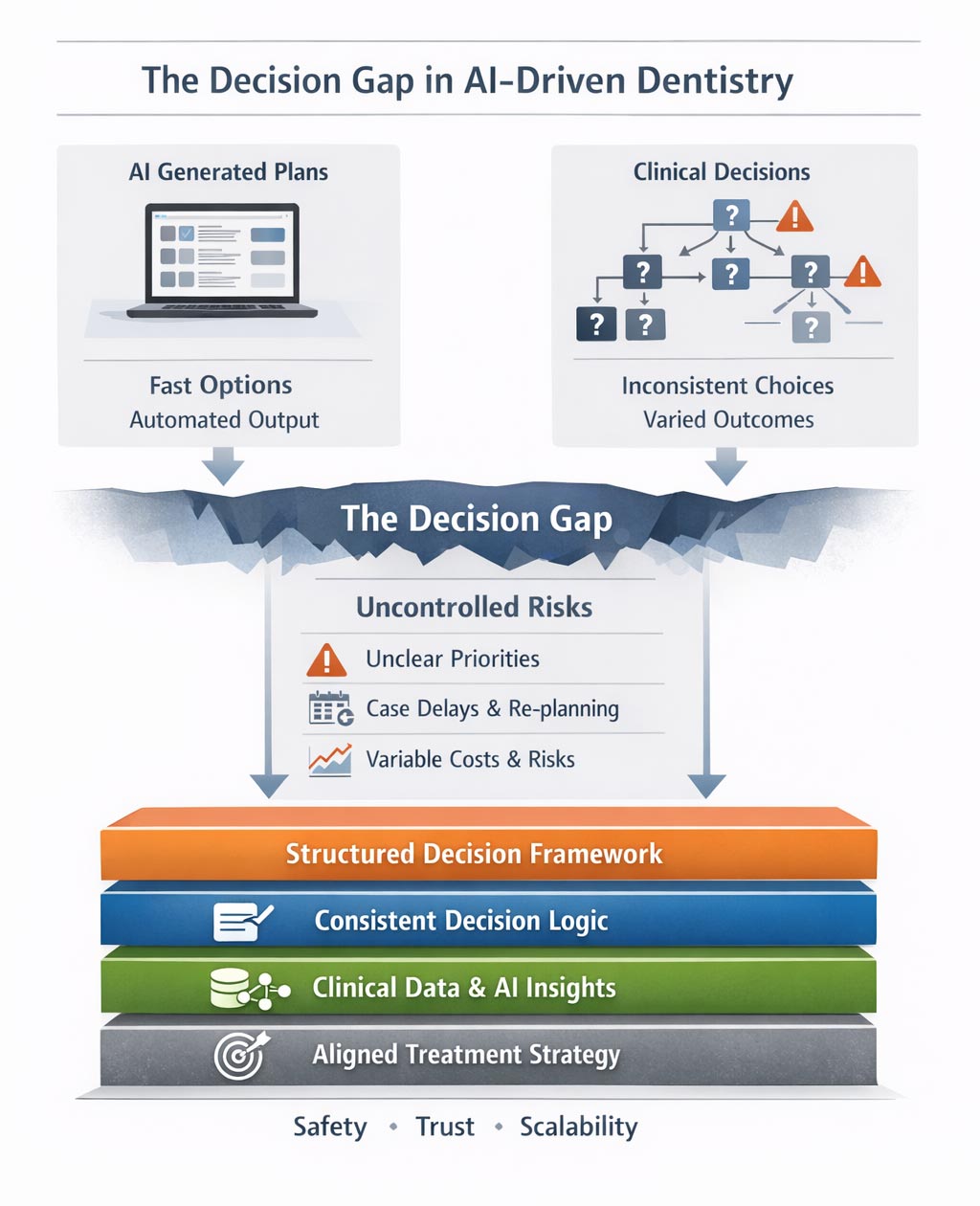
The issue is not that AI tools don’t work. The issue is that plan generation and clinical decision-making are not the same problem.
AI solved generation — not decisions
Most current AI systems in dentistry are excellent at generation. They summarize findings, propose options, and structure plans based on input data. They reduce manual effort and improve clarity compared to handwritten notes or fragmented documentation.
But generation answers a different question than the one clinics actually struggle with.
AI answers: “What could be done?”
Clinics struggle with: “Which option should we choose, why, and how do we remain consistent across cases and clinicians?”
That distinction matters more than it seems.
Generation ≠ decision-making
A treatment plan is not just a list of procedures.
It is a decision embedded in a broader context of: Risk tolerance
Clinical philosophy
Patient expectations
Long-term maintenance
Operational constraints
Legal and reputational exposure
Two clinicians can receive the same AI-generated plan and make different decisions about what to present, prioritize, or defer. Neither is necessarily wrong — but the clinic now carries variation that is rarely visible until something goes wrong.
AI tools do not resolve this variation.
They often amplify it, by producing plausible options without enforcing decision logic.
A clinic vignette: when AI makes inconsistency visible
Consider a multi-chair general practice that recently adopted an AI-assisted planning and presentation tool across all clinicians.
Within weeks, management noticed something unexpected.
Two patients with nearly identical profiles — moderate periodontal findings, early carious lesions, and signs of erosive wear — were seen by different clinicians. Both plans were generated using the same AI system. The layouts were clean. The language was professional.
The documentation looked standardized.
Yet the substance of the plans differed markedly.
One plan emphasized immediate periodontal stabilization and conservative monitoring. The other prioritized restorative treatment with a more aggressive intervention sequence.
Case acceptance, chairtime estimates, and projected costs varied significantly.
No clear clinical error was identified. Each plan could be defended.
What the AI exposed was not a software flaw — but the absence of a shared decision framework behind those choices.
Where inconsistency appears — before treatment even begins
Most treatment failures are not technical failures. They occur before treatment starts.
Clinic operators recognize these patterns immediately:
Cases accepted but never scheduled
Patients pausing due to unclear priorities
Replanning the same case multiple times
Internal disagreement on the “best” approach
Clinicians second-guessing their own recommendations
These are not problems of skill.
They are problems of decision coherence.
When decision-making remains implicit and experience-driven, clinics depend on personal authority rather than shared structure. That works at small scale — and quietly breaks as complexity increases.
Why operators and DSOs feel this first
Individual clinicians can often function comfortably with implicit reasoning. Operators cannot.
As clinics grow, operators face uncomfortable questions:
Why do similar cases produce different plans?
Why do some clinicians escalate risk faster than others?
Why does standardization feel restrictive rather than enabling?
Why does adding talent sometimes increase friction instead of performance?
These are not software problems. They are decision architecture problems.
AI makes planning faster, but it does not make reasoning visible, comparable, or repeatable.
The missing layer: decision consistency
Decision consistency does not mean uniform treatment. It means that differences are intentional, explainable, and defensible.
A consistent clinic can answer:
Why one option was chosen over alternatives
What risks were accepted or deferred
How a case aligns with clinic strategy
Where clinical judgment overrides automation
Without this structure, clinics rely on reassurance — not reasoning.
Polished PDFs may calm patients. AI-generated plans may look confident. But none of this guarantees that decisions are aligned, scalable, or safe over time.
From automation to accountability
Dentistry is entering a post-AI phase faster than many realize.
In this phase:
Plan generation is assumed
Speed is expected
Presentation is table stakes
The differentiator becomes how decisions are evaluated, compared, and repeated.
AI can generate options. Only structured reasoning creates accountability.
As regulatory scrutiny increases and clinics scale, the ability to explain why a decision was made will matter as much as what was done.
Decision consistency is not a luxury.
It is the infrastructure that allows AI to be used safely, intelligently, and at scale.
Closing thought
The question dentistry now faces is not: “How do we generate better treatment plans?”
But rather: “How do we make better decisions — consistently, defensibly, and at scale?”
AI solved one layer. The next bottleneck is already here.
About the author
Dr. Sami Savolainen is a dentist and healthcare systems thinker working at the intersection of clinical decision-making, documentation, and risk management. With experience in clinical practice and system design, he focuses on how planning structures determine safety, trust, and scalability in modern healthcare.

 George Freedman BSc, DDS, FIADFE, DiplABD, FAACD, FASDA, FPFA on behalf of the Artificial Intelligence Journal of Medicine and Dentistry (
 Dr. Hassan Bencheqroun is a pulmonary and critical care physician, assistant professor at the University of California Riverside School of Medicine, and CEO of Medical AI Academy. He hosts “The AI-Ready Doctor podcast” and is an active AiMed participant and speaker bridging clinical care, education, and technology. He is actively focused on practical, clinician-safe AI adoption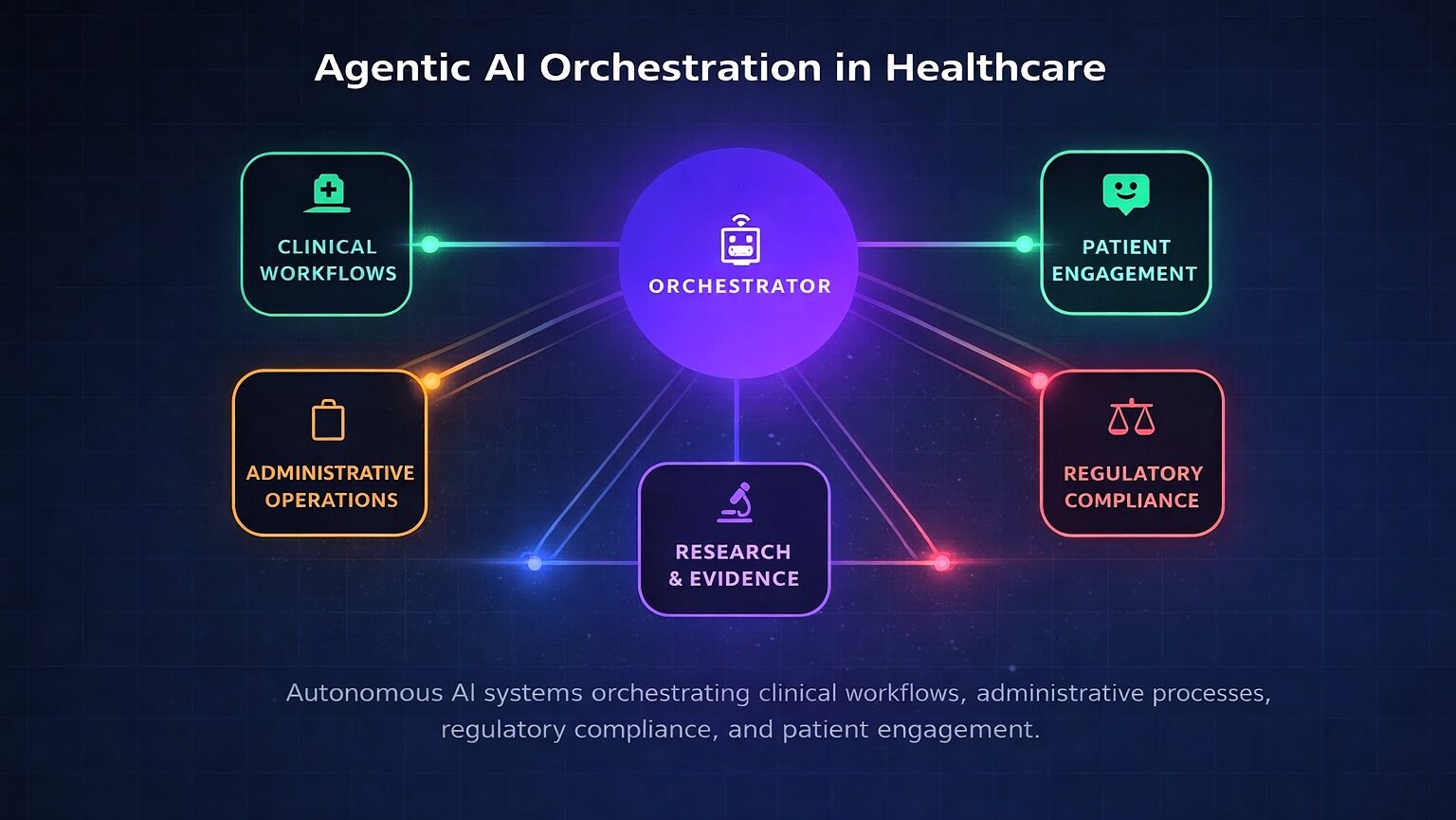
 Dr. Srikanth Mahankali is a recognized authority in medical AI implementation and policy. As Chief Executive Officer of Shree Advisory & Consulting and a member of the NSF/MITRE AI Workforce Machine Learning Working Group, he has contributed to the development of national AI strategy while advancing responsible innovation in healthcare technology.
 Dr. Ameed Khalid Abdul-Hamid is an Iraqi–British dental surgeon and academic researcher, internationally recognized for his contributions to artificial intelligence in dentistry and healthcare. He holds advanced qualifications from the University of Baghdad and the University of London, and is a Fellow of the Royal College of Surgeons (UK). Dr. Abdul-Hamid serves as Chairman of the Arab Organisation for Artificial Intelligence in Healthcare and Chairman of the Saudi-British Medical Forum (London). His research focuses on AI-enabled diagnostics, digital health systems, and the ethical, responsible integration of artificial intelligence in clinical care. In 2025, his work in dental artificial intelligence was published in the British Dental Journal, and he is a recipient of the Alan Turing Award in Dental Artificial Intelligence.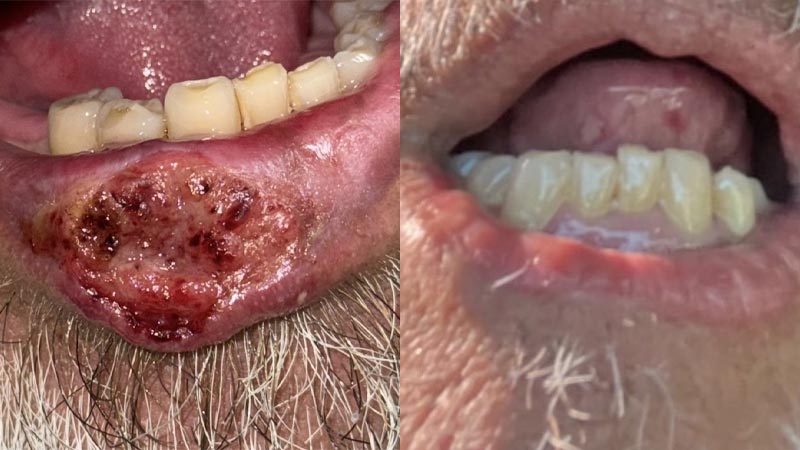


 Dr. Shervin Molayem is a California-based periodontist and co-founder of Trust AI, the first AI-native patient management system in dentistry. He focuses on the oral-systemic connection, salivary diagnostics, and multimodal AI treatment planning. Dr. Molayem serves as a board member, advises, and invests in dental technology companies to accelerate innovation and modernize clinical care.
 Dr. Sami Savolainen is a dentist and healthcare systems thinker working at the intersection of clinical decision-making, documentation, and risk management. With experience in clinical practice and system design, he focuses on how planning structures determine safety, trust, and scalability in modern healthcare.