

As artificial intelligence reshapes clinical practice, one physician-executive argues that the real transformation is not technological — it is moral.
By Traci A. Kimball, MD, MBA
Physician Executive and Founder, The WISH Clinic® and Ekagra Health AI™
Every Patient Is Wounded Twice
Every patient who walks into my wound care clinic arrives with two injuries. The first is physical — a chronic wound that may have resisted treatment for months or years. The second is systemic: a deep, persistent loss of faith that the healthcare system is capable of healing them at all.
I became a wound care physician because I believed I could address both. Over decades of practice, I learned that the act of healing is never purely clinical. It is relational, spiritual even — a covenant between a suffering person and the professional who commits, without reservation, to walking with them until the wound closes or every ethical option has been exhausted. My mother called it simply: if you love your work, it is not work. I call it the laying on of hands.
Now, a new companion has joined us on that journey. Artificial intelligence is entering the exam room, the operating suite, and the billing department simultaneously. And the central question facing every physician, health system leader, and technology executive at this conference is not whether AI will transform medicine. It already is. The question is whether we will allow it to make medicine colder — or more human.
Three Eras, One Reckoning
To understand where we are going, we must reckon honestly with where we have been. Wound care — and medicine more broadly — has passed through three distinct eras in my lifetime.
Woundcare 1.0 was the humanist era. Bedside medicine. The physician as healer, diagnostician, and companion. Empathy was not a soft skill; it was the primary instrument of care. Bureaucracy was minimal. Trust was the currency of the clinical relationship.
Woundcare 2.0 arrived as the fee-for-service era consolidated its grip on American healthcare. Volume replaced value. Data replaced discernment. Physicians became documentation engines, their clinical time consumed by EHR fields that generated revenue but rarely improved outcomes. The wound care specialist who once spent forty-five minutes with a complex patient now had twelve. The system did not break physicians’ desire to heal. It simply starved it of oxygen.
Woundcare 3.0 is the era we are now entering — and it is, I believe, our last best opportunity to restore what was lost. Artificial intelligence, deployed with intention and governed by ethics, can return to the physician what the administrative burden stole: time, attention, and the cognitive space required for genuine clinical presence.
“AI must learn bedside manner before it learns billing codes.”
The Co-Pilot, Not the Replacement
At Ekagra Health, the AI platform I co-founded, we designed our system around a single governing principle: the physician is not a problem to be automated away. The physician is the point.
Our platform integrates EHR management, revenue cycle automation, real-time outcomes analytics, laboratory workflow, patient communications, and compliance infrastructure into a unified intelligence layer. But the architecture of that system reflects a deliberate moral choice. Every module was built to reduce the friction that pulls clinicians away from patients — not to replace the judgment that draws them toward them.
When AI absorbs the complexity of prior authorizations, denial management, and documentation, something remarkable happens: physicians remember why they went to medical school. They look up from their screens. They ask the question that the algorithm cannot yet ask, because it requires the full weight of human presence to ask it well: How are you, really?
This is not sentimentality. It is clinical strategy. Research consistently demonstrates that patient engagement, therapeutic alliance, and perceived empathy are among the strongest predictors of treatment adherence and wound healing outcomes. A physician restored to presence is a more effective physician. AI that serves that restoration is not merely efficient — it is therapeutic.
Leading Change, Not Just Adopting Technology
The implementation of AI in healthcare is, at its core, a leadership problem disguised as a technology problem. I have learned this the hard way.
For years, I believed that leading change meant having the answer first — arriving at the M&M conference with the diagnosis already formed, the solution already sketched. What my own leadership development revealed, uncomfortably, was that this instinct was not strength. It was a form of control that crowded out collaboration, silenced nurses who had seen what I had not seen, and made the team smaller than it needed to be.
The transformation I underwent — from the physician who needed to be the smartest person in the room to the leader who understood that the room itself is the intelligence — maps directly onto the challenge facing health systems today. Organizations that deploy AI as a top-down efficiency mandate will reap resistance, workarounds, and moral injury. Organizations that deploy it as an act of collaborative leadership — inviting clinicians into the design, celebrating early adopters, embedding new workflows slowly and with care — will reap culture change that lasts.
Kotter’s foundational insight remains true in the age of machine learning: change does not succeed because technology exists. It succeeds because people are ready. And people become ready when they are treated not as users to be onboarded, but as healers to be honored.
A New Oath for a New Era
At medical school graduation, we pledged to do no harm. The Hippocratic tradition asked us to hold the patient’s welfare above our own convenience, our own profit, our own pride. It was a moral framework sufficient for a world in which the physician was the most powerful actor in the clinical encounter.
That world no longer exists. Today, the algorithm is also present in the exam room. The insurance adjudication engine is present. The EHR vendor’s incentive structure is present. The venture capital thesis that underwrites the AI platform is present. Medicine has never been a more crowded moral space.
Which is why I would propose, for every technologist, executive, and clinical leader gathered at this conference, a supplementary oath: do no hubris.
Do not assume that because an algorithm performs better than a physician on a diagnostic benchmark, it is ready to be a physician. Do not assume that because a machine can predict wound deterioration with 94% sensitivity, it understands what it means to a 74-year-old woman to lose her ability to walk. Do not assume that efficiency and healing are the same thing, or that speed and care are synonymous.
The greatest wound in healthcare today is not biological. It is systemic. It is the accumulated damage of decades in which the infrastructure of medicine — its incentives, its technology, its administrative architecture — was designed to extract value rather than create it. Healing that wound requires the same qualities we bring to the bedside: honesty about what is broken, courage to change it, and the humility to know we will not do it alone.
The road ahead is long. But for the first time in my career, I believe the technology exists to walk it well. The only question is whether we have the wisdom to let it serve our humanity — rather than replace it.
About the Author
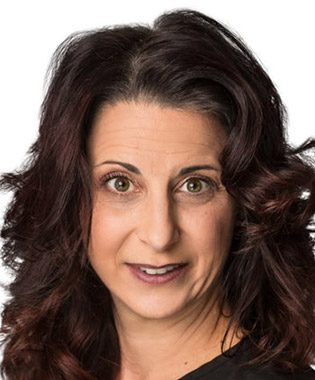 Dr. Traci A. Kimball is a wound care surgeon, healthcare executive, and CEO of Ekagra Health Inc., specializing in limb preservation, chronic wound management, and value-based care. Founder of The WISH Clinic® and Principal of WISH Expert Consulting LLP, she advises healthcare organizations on innovation, regulatory compliance, clinical excellence, and transformation.