
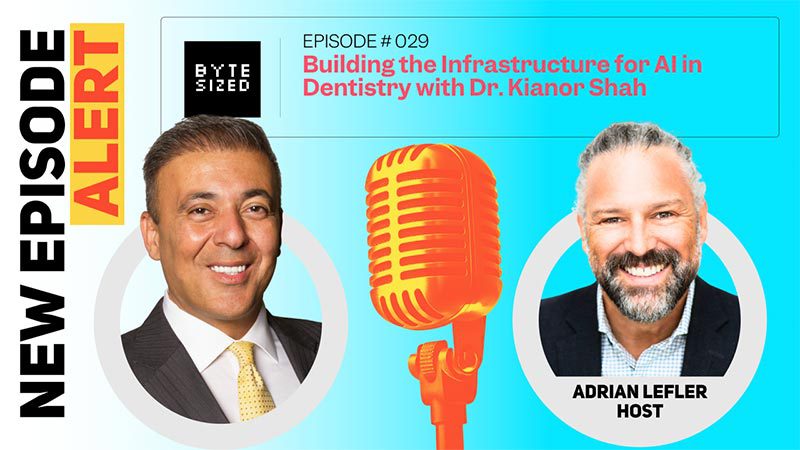
Returning to the Byte Sized podcast with Adrian Lefler felt different this time. Our first conversation planted seeds. This second one? We are watching them grow into something urgent. Adrian does not waste time with softball questions, and I would not want him to. He pushes into the uncomfortable territory where real change happens. This episode, we tackled the question I lose sleep over: Who is actually writing the rules for dental AI in your practice? Because if dentists do not step up and do it ourselves, I promise you someone else will. And their priorities will not look anything like ours.
The Wild West Is Not a Metaphor
As I told Adrian during the episode, we are living through something genuinely unprecedented in healthcare. Every day, new AI tools flood the dental market. Some are brilliant. Some are deeply problematic. And right now, nobody can tell you with certainty which is which. As I explained to Adrian:
“There’s like a wild wild west. We don’t have regulation, advocacy, policy, governance around artificial intelligence. Products are coming into the market that are super cool products, but then there’s little things in the background, kind of like way back behind the veil, where information is being transferred.”
This is not hypothetical. Multiple software companies have already faced lawsuits for HIPAA violations tied to AI implementations. Patient data is moving in ways that existing regulations never anticipated. The technology has evolved faster than the legal frameworks designed to protect people. And the practices caught in the middle are yours.
Legacy Organizations Cannot Solve This
Adrian shared something during our conversation that stuck with me. He had approached the ADA about creating ethical standards for AI in dentistry. The response was underwhelming, to put it charitably. This did not surprise me.
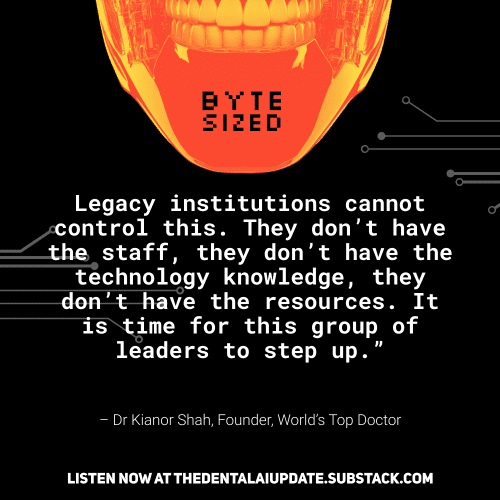
These organizations were built for a different era of healthcare. They move slowly, operate on volunteer labor, and lack the technical depth to evaluate AI systems at the speed the market demands. The gap between what they can do and what needs to be done is enormous. That gap is where real danger lives for your practice.
700 Healthcare Leaders. 160 Countries. One Mission.
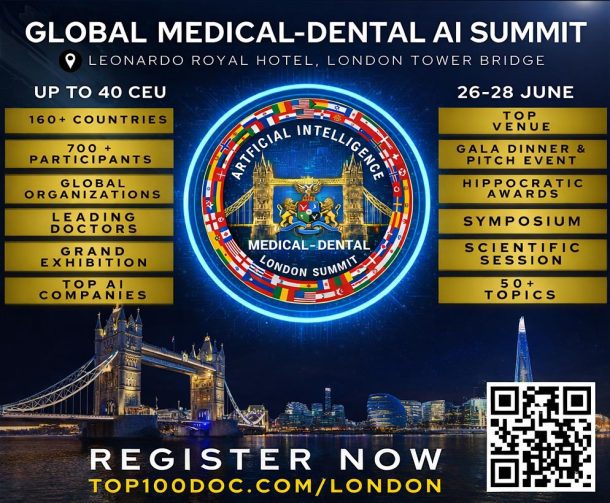
This is why I founded the Global Summits Institute and why we are bringing 700 healthcare professionals together in London in June 2026. The mission is straightforward: create the first comprehensive ethical framework for AI in healthcare before the void gets filled by people who do not share our values.
This is not a trade show. It is a closed, purpose-built environment designed for serious collaboration between doctors, regulators, and governance experts from around the world. The Health Intelligence Board at the summit will work toward a certification seal for AI products that meet established standards around data safety, patient equity, and regulatory compliance.
Think about what that means for you. Right now, you have no reliable way to know whether a vendor’s AI tool will put your practice at legal risk. A meaningful certification framework changes that. It gives you a defensible basis for the decisions you make about implementing AI tools in your practice.
You Are Already on the Front Lines of Predictive Medicine
Adrian’s questions also drew out something I feel strongly about: most dentists dramatically underestimate their position in the future of healthcare. Your patients come to see you twice a year. You update their medical records consistently. You have touchpoints that most medical specialties would envy. As I explained to Adrian:
“As dentists now in predictive analysis, we’re in the forefront of medicine, not the other subspecialties. These patients come to us twice a year at least and we update their medical records. And with AI, we can predict things about their future health status.”
AI can surface patterns in your patient data that flag early cardiovascular risk, diabetes indicators, sleep apnea markers. This is an extraordinary opportunity. It is also an extraordinary responsibility. The dental AI tools transforming your front desk are just the beginning of how this technology will reshape what it means to deliver patient care.
What I Took Away from This Conversation
Talking with Adrian for the second time reinforced something I believe deeply: fear is the biggest obstacle standing between dentists and the future they deserve. I hear it constantly. Fear that AI will replace them. Fear of compliance mistakes. Fear of looking foolish.
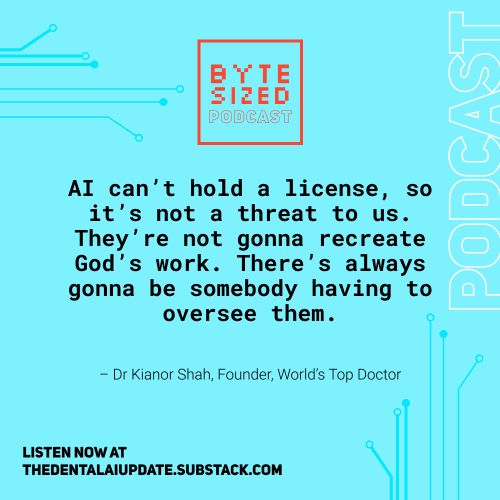
But as I said on the show, AI cannot hold a license. Human oversight is not optional; it is legally required. The dentists most at risk are not those who adopt AI carefully. They are the ones who avoid it entirely and fall behind. AI is not here to replace your team; it is here to help your practice work smarter.
What this conversation crystallized for me is that the antidote to fear is governance. When doctors lead the process of setting standards, we protect both our patients and our practices.
The Trillion-Dollar Disruption Nobody Is Talking About
One of the more provocative points I made during the interview was about insurance companies. These third-party intermediaries were founded roughly 50 years ago, inserting themselves between doctors and patients. Now they represent one of the biggest inefficiencies in healthcare.
AI has the potential to automate verification, claims processing, and administrative functions that currently justify the existence of these middlemen. I am not saying this will happen overnight. But the technology exists to dramatically reduce or eliminate the friction they were supposed to solve. That is a conversation dentists should be having right now.
Listen to the Full Episode
I encourage you to listen to the full Byte Sized podcast episode to hear the complete conversation with Adrian. The stakes around AI governance in dentistry are high, and the window to shape those standards is narrow.
If you want to learn more about the 2026 Global Medical Dental AI Summit in London or get involved in this work, visit top100doc.com/london or connect with me through kianorshah.com.
Thank you to Adrian, the Byte Sized team, and everyone in this community who cares about getting this right.