
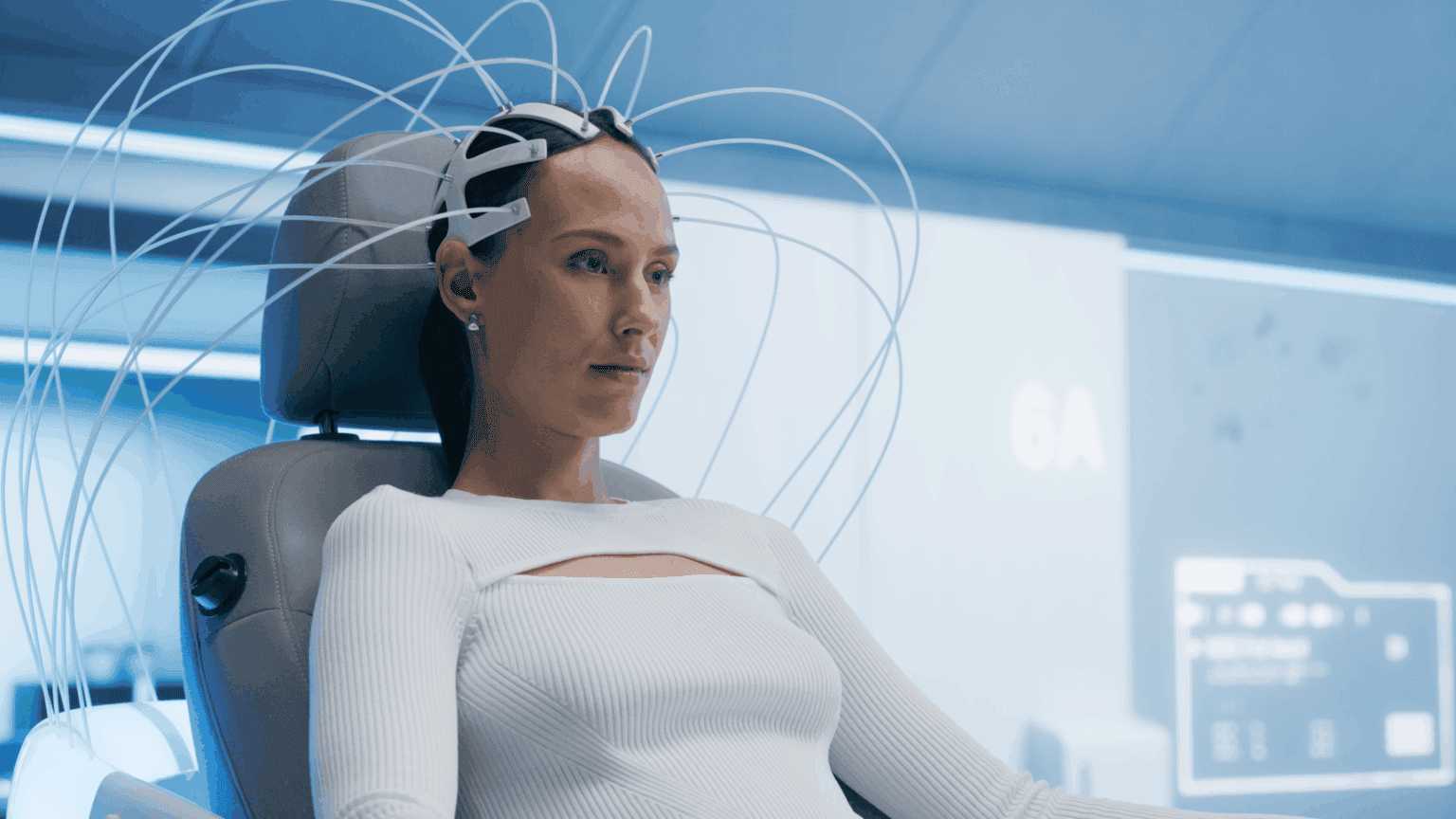
In the rapidly advancing landscape of medical technology, few innovations capture the clinical and public imagination as profoundly as Brain-Computer Interfaces (BCIs). Once a concept confined to science fiction, BCIs are now a clinical reality, emerging as a transformative modality for patients with severe neurological impairments. These sophisticated systems establish a direct communication pathway between the brain and an external device, translating neural signals into commands that can restore lost motor and communicative functions. As we transition from investigational research to tangible clinical application, it is imperative for clinicians, scientists, and policymakers to assess the evidence critically, navigate the complex implementation challenges, and steer the ethical trajectory of this powerful technology.
At its core, a BCI decodes intended movements from neural ensemble activity in the motor cortex, translating multi-unit spike patterns into kinematic parameters for an output device.1 The recent acceleration in BCI development has been catalyzed by the integration of artificial intelligence (AI), particularly machine learning and deep learning algorithms. These computational tools have dramatically enhanced the fidelity and efficiency of neural decoding, enabling the discernment of subtle patterns in complex brain activity with unprecedented precision.2 This synergy between computational neuroscience and AI is unlocking clinical applications that were previously deemed unattainable, heralding a new era of restorative neurology.
A new dawn for patients with paralysis: From restoration to recovery
The most immediate and life-altering impact of BCIs is being realized in patients with paralysis resulting from conditions such as spinal cord injury (SCI), amyotrophic lateral sclerosis (ALS), and stroke. For individuals who have lost the ability to move or speak, BCIs offer a gateway to regain autonomy and reconnect with the world. Landmark clinical trials conducted with small cohorts under carefully controlled conditions are demonstrating not just functional restoration, but also evidence of underlying neurological recovery.
A pivotal 2023 study in Nature by Lorach et al. detailed a “digital bridge”—a brain-spine interface that restored communication between the brain and the spinal cord in an individual with chronic tetraplegia. This BSI enabled the participant to stand and walk naturally, with the system’s reliability remaining stable for over a year. The transition to
independent home use represents a watershed moment, marking the technology’s maturation from a laboratory-based tool to a viable medical device.3 Remarkably, neurorehabilitation supported by the BCI led to improved neurological recovery, with the participant regaining the ability to walk with crutches even when the interface was switched off.
This progress is mirrored across the field, with the number of individuals with permanent BCI implants growing from approximately 50 in 2020 to 70-80 in 2025. While this accelerating clinical translation is driven by multiple research groups and commercial entities, it is crucial to recognize that these remain small-scale deployments. The strongest results continue to emerge from a handful of specialized centers working with carefully selected participants under controlled task conditions.
| Company/Initiative | Key BCI Technology & Approach | Key Clinical Finding / Status (as of late 2025) |
| BrainGate | Intracortical microelectrode arrays (Craniotomy) | Demonstrated typing speeds of 90 characters per minute with >99% accuracy in controlled laboratory settings.4 |
| Synchron | Endovascular stent electrode (Stentrode) | Avoids open-brain surgery. The COMMAND trial, a 15-patient feasibility study, met its primary safety endpoint.5 |
| Neuralink | High-density, flexible electrode “threads” (Craniotomy) | Approximately 3-5 individuals with paralysis are reportedly using the implant to control digital devices in supervised research settings. |
| Paradromics | High-data-rate cortical implants (Craniotomy) | Received FDA Breakthrough Device Designation and approval for its Connexus BCI clinical trial focused on restoring speech.6 |
| Clinatec | Implantable BCI with exoskeleton control (Craniotomy) | Enabled a tetraplegic patient to control a four-limb exoskeleton and restored natural walking in a paraplegic patient.3 |
The computational engine: AI’s role in decoding neural intent
The sophistication of modern BCIs is inextricably linked to advancements in AI. The brain’s electrical signals are inherently noisy and complex, subject to drift over time as electrodes shift position and tissue responds to chronic implantation. Machine learning models, particularly deep neural networks such as Recurrent Neural Networks (RNNs) and Long Short-Term Memory (LSTM) networks, are exceptionally adept at identifying meaningful patterns within this neural variability.7 More recently, Transformer-based architectures and self-supervised learning approaches have emerged as state-of-the-art methods for neural decoding, offering improved performance and reduced training data requirements. These AI “co-pilots” learn to associate specific patterns of brain activity with a user’s intended actions. Furthermore, advances in transfer learning and domain adaptation have reduced within-session calibration time from hours to 15-30 minutes in many systems.
However, cross-session and cross-task transfer remain active areas of research.8
Modern BCIs increasingly employ closed-loop adaptive decoders that continuously update based on user feedback and changing neural patterns. These systems integrate multi-modal signals – combining neural recordings with eye tracking or residual muscle activity – to achieve more robust and reliable control, particularly in real-world environments outside the laboratory.
Systematic reviews have confirmed the superiority of deep learning approaches for enhancing the accuracy of neural decoding in specific, well-defined tasks.2 However, it is crucial to distinguish between BCI modalities and their real-world applicability. While non-invasive EEG-based systems achieve motor imagery classification accuracies around 85%,9 invasive intracortical systems consistently demonstrate performance exceeding 95% for discrete classification tasks (e.g., cursor selection, menu navigation) in laboratory settings, though continuous trajectory control typically achieves 70-85% accuracy.4 As these AI models become more integrated into clinical devices, addressing the “black box” problem through explainable AI (XAI) will be critical for regulatory approval and clinical trust. It is important to note that models demonstrating impressive results in controlled research environments may require substantial adaptation when deployed across different tasks, environments, or individual users.
Navigating the regulatory and ethical frontier
As with any transformative medical technology, the path from laboratory to widespread clinical adoption is governed by rigorous regulatory oversight and complex ethical considerations. In the U.S., high-performance BCIs are designated as Class III medical devices and require the most stringent Premarket Approval (PMA) pathway from the FDA. To accelerate this process, many BCI developers have received Breakthrough Device
Designation, which provides for a more collaborative and prioritized review. The FDA’s 2021 draft guidance on implanted BCI devices, supplemented by workshops on adaptive trial designs, provides a clear framework for developers.10 However, this must be complemented by robust post-market surveillance to monitor long-term safety and signal stability. In this area, international regulatory bodies, such as the European Union (under its Medical Device Regulation), are also establishing stringent requirements. Emerging regulatory considerations include cybersecurity requirements for wireless implantable BCIs, the use of real-world evidence (RWE) for post-market surveillance, and the development of international standards through IEEE, ISO, and ASTM working groups to ensure device safety and interoperability.
Beyond regulatory approval, the deployment of BCIs raises profound ethical questions. The ability to decode neural signals brings concerns about mental privacy and cognitive liberty to the forefront. The unique challenge of ensuring informed consent—when a device might decode thoughts a user did not consciously intend to share—demands novel ethical and legal safeguards. Frameworks such as the OECD Recommendation on Responsible Innovation in Neurotechnology and the Neurorights Foundation’s proposed legal protections are vital starting points.11
Critical questions of neural data governance remain unresolved: Who owns the neural data generated by these devices? How long should it be retained? What restrictions should govern secondary use for research or commercial purposes? The IEEE P2976 working group on neural data privacy is developing standards to address these questions, but comprehensive legal frameworks are still emerging.
Issues of equity and access are also paramount. The specter of “neurocolonialism”—where technologies developed in high-income nations are deployed in low-resource settings in an extractive manner—is a critical challenge. For example, collecting neural data from vulnerable populations for analysis and commercialization elsewhere, without equitable benefit-sharing, would perpetuate digital colonialism in the neurotechnology domain.
Within high-income nations, equity challenges persist. Geographic disparities in access to specialized neurosurgical centers, insurance coverage variations, and the substantial out-of-pocket costs for experimental therapies create barriers that disproportionately affect rural and socioeconomically disadvantaged populations. Moreover, the disability rights community has raised important questions about the framing of BCIs as ‘cures’ versus tools for accommodation, emphasizing the principle of ‘Nothing About Us Without Us’ in technology development.
The future is clinical: From approval to access
Despite the challenges, the future of Brain-Computer Interfaces is no longer a distant prospect; it is an emerging clinical reality for specific patient populations. The convergence
of neuroscience, AI, and medicine is creating a powerful new therapeutic toolkit for some of the most devastating neurological conditions. Based on current regulatory trajectories, the first commercial approvals for narrowly defined indications—such as severe paralysis with communication impairment—are anticipated by 2027-2028, with broader but still clinically focused adoption by 2030-2032. However, FDA approval is only the first step. Widespread clinical access will depend on establishing clear reimbursement pathways with Medicare, Medicaid, and private insurers – a critical health economics challenge that the field must address proactively.
However, scaling from clinical trials to widespread deployment faces substantial practical barriers. Manufacturing must transition from research-grade, hand-assembled devices to commercial-grade production with stringent quality control. Neurosurgical capacity is limited—specialized training programs are needed to prepare surgeons for these novel procedures. Device longevity is typically 5-10 years, necessitating replacement surgeries and upgrade pathways, with adverse event rates, including infection, remaining below 5% in recent trials. The total cost of care—including surgery ($100,000-$200,000), devices, follow-up visits, and maintenance—raises critical cost-effectiveness questions that payers will scrutinize.
It is essential to maintain realistic expectations. BCIs are not poised to replace keyboards, smartphones, or conventional assistive technologies for the general population in the foreseeable future. Instead, their transformative potential lies in serving individuals for whom conventional interfaces are inaccessible—those who are locked-in, severely paralyzed, or have lost the ability to communicate through traditional means. For this population, a reliable, high-bandwidth neural communication channel is not a lifestyle enhancement but a profound restoration of agency and connection to the world.
From the patient perspective, early adopters report profound improvements in quality of life and sense of agency. However, the daily reality includes calibration sessions, periodic clinical visits for system maintenance, and the psychological adjustment to living with an implanted device. Understanding and supporting the lived experience of BCI users—not just the technical performance—will be essential for successful long-term deployment.
For physicians, surgeons, and allied health professionals, the rise of BCIs signals a need to engage with and understand this rapidly advancing field. By fostering a collaborative ecosystem built on evidence-based practice, rigorous scientific validation, and a steadfast commitment to ethical principles, we can ensure that the mind’s new frontier benefits all of humanity – less magic, more medicine.
References
- Donoghue, J. P. (2002). Connecting cortex to machines: recent advances in brain interfaces. Nature Neuroscience, 5(Suppl), 1085-1088.
- Saeidi, M., Karwowski, W., Farahani, F. V., Fiok, K., & Taiar, R. (2021). Neural Decoding of EEG Signals with Machine Learning: A Systematic Review. Brain Sciences, 11(11), 1525.
- Lorach, H., Galvez, A., Spagnolo, V., et al. (2023). Walking naturally after spinal cord injury using a brain‒spine interface. Nature, 618, 126-133.
- Willett, F. R., Avansino, D. T., Hochberg, L. R., Henderson, J. M., & Shenoy, K. V. (2021). High-performance brain-to-text communication via handwriting. Nature, 593, 249-254.
- ClinicalTrials.gov. (2024). A Feasibility Study to Assess the Safety and Efficacy of the Synchron Stentrode System for Motor Enablement in Patients With Severe Paralysis (COMMAND). NCT05035823.
- STAT News. (2025, November 20). FDA approves Paradromics’ brain-computer interface trial for speech restoration.
- Livezey, J. A., & Kording, K. P. (2021). Deep learning approaches for neural decoding across tasks and time. Briefings in Bioinformatics, 22(2), 1577-1591.
- Glaser, J. I., Benjamin, A. S., Farhoodi, R., & Kording, K. P. (2020). The Roles of Supervised Machine Learning in Systems Neuroscience. Progress in Neurobiology, 194, 101826.
- Das, A., et al. (2025). Enhanced EEG signal classification in brain-computer interface systems by leveraging advanced machine learning and deep learning. Scientific Reports.
- U.S. Food and Drug Administration. (2021, May 20). Implanted Brain-Computer Interface (BCI) Devices for Patients with Paralysis or Amputation: Non-Clinical Testing and Clinical Considerations.
- OECD. (2019). Recommendation of the Council on Responsible Innovation in Neurotechnology. OECD Legal Instruments.
About the author
 Dr. Srikanth Mahankali is a leading expert in the implementation of medical AI and policy. As CEO of Shree Advisory & Consulting and a member of the NSF/MITRE AI Workforce Machine Learning Working Group, he shaped national AI strategy while driving responsible innovation in healthcare.